Beneficiary Designations Usually Override Your Will: Check These Accounts
Many people assume their will decides who gets everything. For several of the largest assets most people own, that isn't how it works.
Accounts that usually pass outside the will
- 401(k), 403(b) and IRA accounts go to the beneficiary named on the account.
- Life insurance, including employer group life, goes to the named beneficiary.
- Payable-on-death (POD) bank accounts go to the named POD beneficiary.
- Transfer-on-death (TOD) brokerage accounts and, in some states, TOD deeds for real estate and vehicles.
- Jointly owned accounts with right of survivorship generally pass to the surviving owner.
For these, the named beneficiary or surviving owner generally receives the asset directly, regardless of what the will says. That's often a good thing: it's faster and avoids probate for those assets.
Where it goes wrong
- An ex-spouse is still listed on an old 401(k) or life policy.
- A beneficiary has died and no contingent beneficiary is named.
- Minor children are named directly, which can require a court-supervised arrangement.
- "Estate" is the beneficiary, pulling the asset into probate unnecessarily.
- The will and the forms disagree, causing family conflict.
Rules vary by account type and state (for example, some state laws automatically revoke an ex-spouse designation after divorce for some assets, and some employer plans have spousal consent rules), so don't rely on assumptions.
How to check in 30 minutes
- List every retirement account, life insurance policy and bank or brokerage account.
- Log in or call each provider and ask: "Who is the primary and contingent beneficiary on file?"
- Update anything out of date. Most providers have an online form.
- Write the beneficiary and the date you checked in your binder.
- Repeat after marriage, divorce, a birth or a death.
Talk to a professional when...
You have minor children, a blended family, a beneficiary with special needs, or a large estate. An estate attorney can explain trusts and how your will and designations fit together.
General information, not legal or financial advice.
The Just-In-Case Life Binder has a beneficiary column on every account page and an annual review checklist.
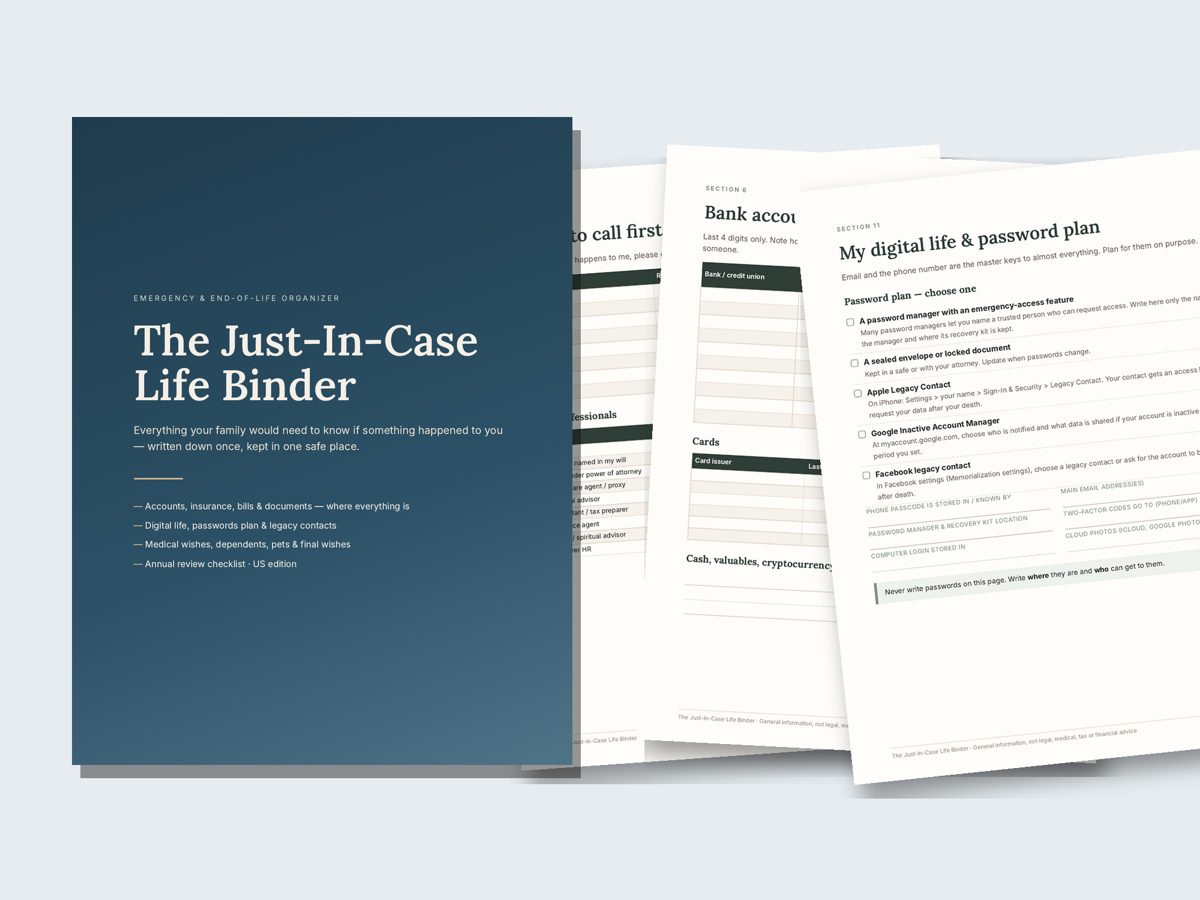
Just-In-Case Life Binder — $17
19-page printable binder for everything your family would need to know, plus letter of instruction templates and a life inventory spreadsheet. Instant download: PDF + DOCX + XLSX.
Get the Just-In-Case Life BinderFamily Paperwork Bundle — $34More guides
- In Case of Death Binder: What To Include (Complete Checklist)
- What Your Family Needs To Know If You Die: 10 Things To Write Down Now
- How To Leave Passwords for Your Family Safely
- Letter of Instruction: Example and Template
- Digital Legacy: Set Up Apple Legacy Contact, Google and Facebook
- End-of-Life Planning Checklist: Get Your Affairs in Order
- Important Documents To Keep and Where To Store Them
- Emergency Binder for Aging Parents: What To Ask and Write Down
- Estate Planning Checklist for Young Families (Start Here)